
Mice Problems in Brampton & Mississauga: Why New Homes Get Mice and How to Keep Them Out
Mice control in Brampton and Mississauga is a concern for homeowners in both established neighbourhoods and newer residential developments. While many people assume that mice are mainly a problem in older houses, the reality is that even relatively new homes can experience rodent activity.
Construction conditions, changes to the surrounding environment, cold weather, available food and small openings around a home can all create opportunities for mice to enter. Once inside, mice can find warmth, shelter and nesting areas that allow them to remain hidden.
The good news is that a mouse problem does not have to become a permanent part of homeownership. Effective rodent control involves more than simply putting out bait. A strong approach combines inspection, monitoring, population control and exclusion to address both the immediate mouse problem and the conditions that allow mice to enter in the first place.
Why Do Mice Enter Homes?
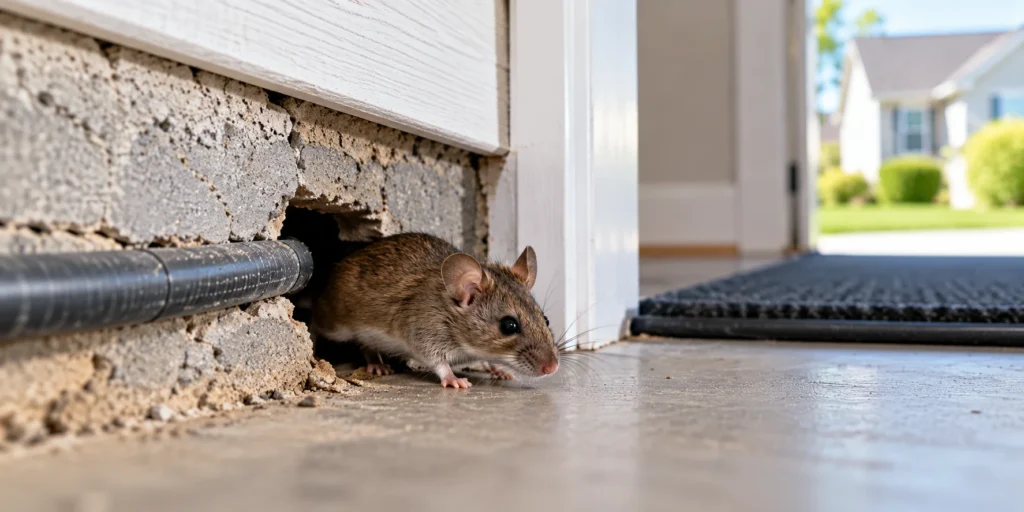
There is rarely one single reason why mice enter a house. In many Brampton and Mississauga homes, several conditions can work together to make a property attractive to rodents.
1. Ground Disturbance During New Construction
New residential development can dramatically change the surrounding landscape. Soil may be excavated, vegetation removed, lots regraded and existing sheltered areas disturbed.
Rodents living around a construction site may lose established nesting or feeding areas and begin searching for alternative shelter. This can change where rodents travel and where they look for food and protection.
Construction does not automatically create a mouse infestation. However, once new homes are occupied, they can provide warm, protected spaces such as basements, garages and utility areas that may be attractive to mice.
2. Cold Weather Drives Mice Toward Shelter
As temperatures fall, mice have a strong reason to search for warm and protected places.
A heated home can provide shelter from cold weather along with access to food and water. Basements, garages, wall cavities, utility areas and other concealed spaces can offer suitable conditions.
This is one reason homeowners may suddenly notice mouse activity during the fall or winter, even if they did not see mice during the warmer months.
3. Mice Can Enter Through Very Small Openings
One of the most important things homeowners should understand about mouse control is how small an opening can be.
An adult mouse can squeeze through an opening of approximately 1/4 inch (6 mm) under suitable circumstances.
This means that homeowners do not necessarily need to find a large hole in the foundation to explain how mice got inside. Entry points can occur around:
- Pipes
- Utility penetrations
- Electrical cables
- Exterior vents
- Doors
- Garage areas
- Foundation transitions
- Construction joints
- Other small openings
A gap that may look insignificant to a homeowner can still provide a potential route for a mouse to enter the house.
4. Food Makes a Home More Attractive
Once mice find a building that provides shelter, accessible food can encourage them to stay.
Potential food sources can include:
- Dry goods that are not properly stored
- Pet food
- Bird seed
- Garbage
- Food residue
- Crumbs
- Other accessible household materials
Basements, garages and storage rooms can be particularly important because food, cardboard boxes and household items may remain stored and undisturbed for long periods.
Reducing accessible food sources can make a home less attractive to rodents.
5. Shelter and Nesting Materials
Mice are not only looking for food. They also need a protected place to nest.
Cluttered storage areas, insulation, cardboard, paper products and other relatively undisturbed materials can provide suitable nesting opportunities.
Reducing unnecessary clutter in basements, garages and storage areas can therefore be an important part of mice prevention.
6. Construction Openings and Building Details
Even newer houses can have small gaps or openings around building services.
Pipes, electrical cables, HVAC penetrations, garage doors, exterior vents and other transitions can create pathways for rodents if they are not adequately sealed or if seals deteriorate over time.
For this reason, the age of a house alone does not determine its risk of rodent entry. The condition and accessibility of the building envelope can be more important.
Signs That You May Have a Mouse Problem
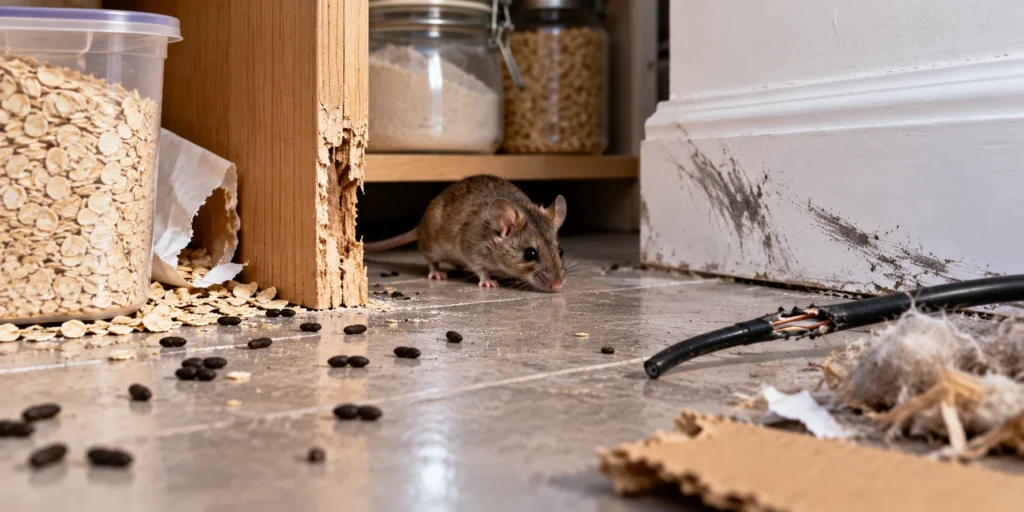
Mice are primarily active when a house is quiet, so homeowners may not always see them directly.
Instead, it is often the evidence they leave behind that indicates activity.
Common signs of a mouse problem include:
- Droppings in cabinets, basements, garages or storage areas
- Scratching or movement sounds, particularly at night
- Gnaw marks on stored materials or other accessible items
- Nesting material in concealed areas
- A persistent rodent odour
- Greasy or dirty rub marks along frequently travelled routes
- Damaged food packaging
- Repeated sightings of mice or fresh droppings
If these signs continue or appear repeatedly, the issue may involve more than an isolated mouse.
What Problems Can Mice Cause?
A mouse infestation is more than an inconvenience. Rodents can affect sanitation, stored belongings and, in some situations, building components and electrical systems.
Contamination
Mice can contaminate areas with urine, droppings and nesting material. Food and food-contact surfaces may also become contaminated if rodents gain access to kitchens, pantries or storage areas.
Odours and Unsanitary Conditions
Rodent urine, droppings and nesting activity can create unpleasant odours. This can be particularly noticeable when mouse activity occurs inside enclosed wall, ceiling or mechanical spaces.
Chewing and Property Damage
Mice have continuously growing incisors and gnaw on materials. They may damage packaging, insulation and other materials.
In some circumstances, rodent activity around wiring can also create a potential electrical concern.
Rapid Reproduction
Mice can reproduce quickly under favourable conditions. This is one reason a small number of mice can become a much larger problem if the underlying entry and shelter conditions are not addressed.
Why Do Mice Keep Coming Back?
One of the biggest mistakes homeowners can make when dealing with rodents is focusing only on the mice they can see.
If a mouse is removed but the entry point remains open, another mouse can eventually use the same route. Similarly, if food and shelter remain available, the property may continue to be attractive to rodents.
Simply catching or removing individual mice may reduce activity temporarily without addressing the underlying problem.
The objective of effective rodent control is to break the cycle:
Identify how mice are getting inside → reduce the active population → address entry points → make it difficult for new mice to enter.
This is why exclusion and prevention are important parts of long-term mice control.
The ShieldPoint Approach to Mice Control

A professional mice-control program should be based on the conditions at the property rather than a one-size-fits-all treatment.
1. Inspection
The first step is understanding what is happening at the property.
An inspection looks for evidence of mouse activity and investigates likely entry points around accessible areas of the property.
The objective is to understand both where the mice are active and how they may be getting inside.
2. Monitoring
Monitoring helps determine whether activity is continuing.
It can also help identify travel patterns and areas that may require additional attention.
Monitoring is useful because visible mouse activity does not always tell the complete story of what is happening inside a property.
3. Population Control
Where appropriate, professional rodent-control methods such as properly placed bait stations can be used to reduce active mouse populations.
Treatments should be carried out according to the product label and applicable requirements.
Population control addresses the mice currently present, but it should be considered alongside inspection and exclusion rather than as the entire solution.
4. Exclusion and Sealing Entry Points
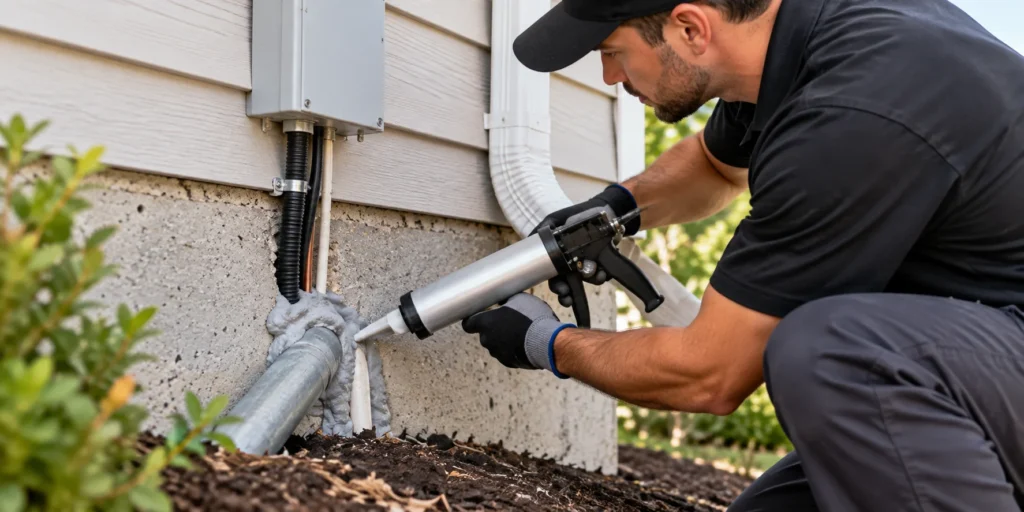
Controlling mice inside the home is only part of the solution.
Accessible entry points should be identified and sealed using appropriate exclusion materials and methods.
The goal is to prevent new mice from using the same pathway to enter the property.
This step is especially important when a recurring mouse problem is connected to gaps around pipes, cables, vents, garage areas, foundation transitions or other building openings.
5. Prevention

Prevention helps turn short-term treatment into a longer-term solution.
Homeowners can reduce the likelihood of recurring mouse activity by:
- Reducing accessible food sources
- Keeping storage areas organized
- Addressing building openings
- Checking vulnerable exterior areas
- Maintaining appropriate door and garage seals
- Regularly inspecting areas where rodents could potentially enter
For additional information about rats, mice and rodent prevention, homeowners can also refer to Health Canada’s guidance on rats and mice.
What Homeowners Can Do to Reduce Mouse Risk
There are several practical steps homeowners can take to reduce the risk of mice entering their homes.
Seal Accessible Openings
Check around pipes, cables, vents and other building penetrations for small openings and address them appropriately.
Store Food Properly
Keep food in sealed containers and clean food spills promptly.
Manage Pet Food
Where practical, avoid leaving pet food accessible overnight.
Store Bird Seed Properly
Bird seed and similar products should be stored in rodent-resistant containers.
Secure Garbage
Keep garbage in secure containers to reduce potential food sources.
Reduce Clutter
Reduce unnecessary clutter in basements, garages and storage rooms. This can limit potential nesting and hiding areas.
Check Garage-Door Seals
Inspect garage-door seals and other exterior door gaps for potential entry points.
Inspect Around the Foundation
Check the foundation and exterior of the home for small openings that could potentially provide access.
Pay Attention Before Fall and Winter
Fall and winter can be important times to inspect a property and address vulnerable areas before mice begin seeking warmer shelter.
When Should You Call a Professional?
Consider professional mice control when you are:
- Seeing mice repeatedly
- Finding fresh droppings
- Hearing activity inside walls or ceilings
- Discovering multiple potential entry points
- Experiencing a mouse problem that returns after temporary treatment
A professional can help determine whether the issue is an isolated mouse, an active infestation or an ongoing entry problem.
Where conditions involve building-envelope defects, inaccessible areas, electrical concerns or significant contamination, additional qualified professionals may also be appropriate.
Mice Control in Brampton and Mississauga: Focus on the Cause
Mice problems in Brampton and Mississauga can occur in old houses, established neighbourhoods and newer developments.
Ground disturbance during construction, seasonal shelter-seeking, tiny building openings, accessible food and suitable nesting areas can all contribute to rodent activity.
The most effective long-term strategy is not simply to remove the mice you see. It is to understand why they entered in the first place and address the conditions that allow the problem to continue.
At ShieldPoint, our approach combines inspection, monitoring, appropriate rodent control and exclusion to help homeowners address the immediate problem while reducing the chance of new mice entering the home.
Control the mice. Find the entry points. Seal the gaps. Reduce the attractants. Prevent the next infestation.